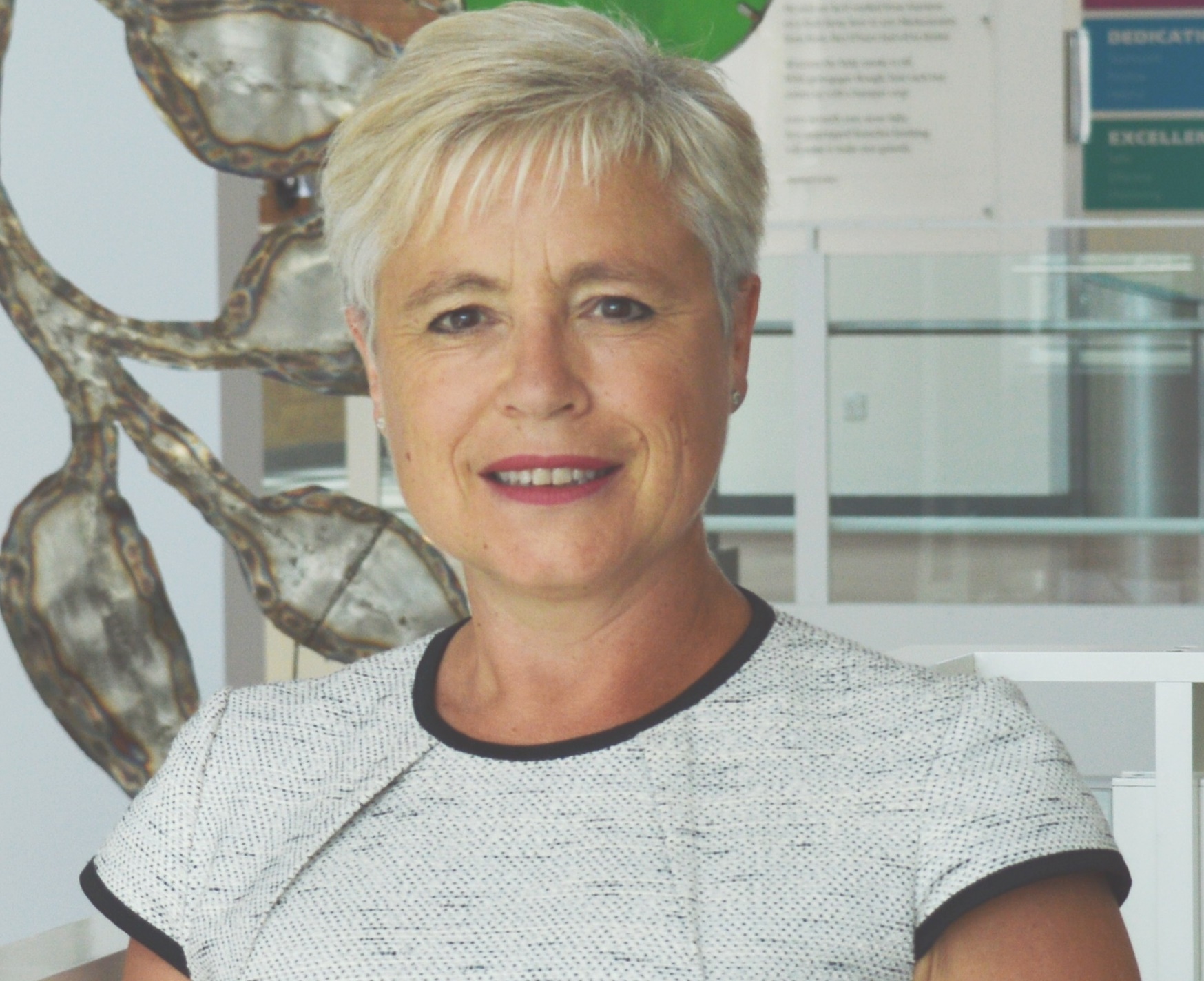
 Erika is a consultant radiologist and was Medical Director in Norwich from 2018 to 2023. From 2023 to 2025 she was the National Medical Director for Transformation at NHS England including clinical leadership of digital programmes, artificial intelligence, research and pathway transformation. She was previously National Clinical Director for Imaging and then all Diagnostics. She joined BIR’s Council in October 2025.
1. In your opinion, what are the key issues and challenges for the radiology and radiation oncology workforce?
I think the UK faces very significant challenges around the number of clinicians practising in both these spaces as well as in making sure we train enough people for the future. It’s vital that the workforce is equipped to deal with current technological developments, particularly the effective use of AI. I firmly believe AI is an asset for clinical practice in both specialties, but it does mean the workforce will need to be trained differently.
We also need to embrace training all clinicians for the roles they can play in this space. We increasingly recognise the value of multidisciplinary working, and everyone in clinical teams will need to be trained differently to make the best use of AI in healthcare. That said, there will always be an important role for doctors, whose broad and long training equips them to lead teams and guide the direction of our specialties.
Radiology and radiation oncology have always embraced technological change, and the pace of change has been incredibly fast—certainly over the 30-plus years of my career. I don’t see that altering in anyway in the coming years.
2. What are you proudest of in your life so far? (can be personal or career)
I thought quite a lot about this question. I think I'm proudest that I've had many different roles in my professional career as well as my clinical practice and I've always tried to deliver significant changes that affect patients positively. I am also proud that I've done that while enjoying a busy home and family life; enjoying time with my children and our blissful home world in the Norfolk Broads. I think that balancing act benefits both sides of life, so my work benefits from my domestic life and my domestic life benefits from my work. I think the challenge as you come towards the twilight of a long career is maintaining that balance but also ensuring that as you move towards doing less work that your home world can embrace that. I’ve always said that what I'll be remembered for after I finish professionally working is being a mum rather than anything else and that's probably the element of my world that will take precedence as I move over the next decade or two.
3. If you could go back in time, what advice would you give your younger self?
It will all be okay and doing your best may not always be perfect, but it’s your best, and if it’s your best that will be fine!
4. Which person (living or deceased) would you most like to spend the evening with and why?
My father, who was a professor of medieval history, a real polymath and fantastic company. He died too soon of cancer at 70 and I would love to be able to spend one more evening with him.
5. Who has been the biggest influence in your life?
My Mum. She brought my sister and I up on her own from when I was five and my sister was three. She made her way up from being a social worker to being a Director of Social Services. She is extremely funny and feisty, with the kindest heart, but she can also still be quite a handful, even though she is almost 87. I worry that she continues to terrorise the Norfolk country lanes driving her soft-top Mercedes!
I think we could all aspire to being like her in our old age.
6. What is the most difficult thing you’ve dealt with at work?
I have dealt with a lot of difficult things over the years, but I think that being Medical Director of a very big acute hospital during the pandemic has to be the hardest thing. Hugely rewarding but extremely tough too. Because of the shielding rules I had to be at home for the first five months and as Medical Director I desperately wanted to be with my staff and be visible. We were all so blessed by having platforms like Teams and Zoom to keep in touch at that time and I spent many hours having virtual cups of coffee with staff who were struggling during that period.
7. Can you sum the BIR up in three words?
Longevity – Multidisciplinary – Education.
The BIR has been part of my professional life since I started training as a radiologist in 1992 so very integral to me. The multidisciplinary nature of the BIR is hugely important – I do not believe a radiologist or a radiation oncologist can ever practice in isolation. We are all part of a team and we are better than ourselves by being part of really effective multidisciplinary teams. And the educational offering from the BIR is absolutely brilliant too!
8. Why did you originally join the BIR and would you encourage your team to join as well?
I was training at St Thomas’ and one of my consultants recommended it to me. The fact that there were reduced rates for trainees for all the educational offerings from the BIR, covering such a breadth of our specialty, has always been important.
Yes I do definitely recommend it to my own doctors in training.
9. What made you decide to become a radiologist?
I love the diagnostic conundrum and that’s the bit of being a physician that I liked the most. I have always been fascinated by imaging and pictures – I’m a person who thinks in pictures rather than words. As my career has progressed I have kept the bits of radiology that are patient focused as well as having a career with lots of managerial roles and responsibilities, and the combination has suited me brilliantly. I love being a breast radiologist – I really appreciate the contact with patients and enjoy the technical side of the intervention involved in breast radiology. I also continue to undertake gynaecological ultrasound including quite a lot of paediatric scanning for teenagers. This obviously requires a different set of communication skills and having had six teenagers myself has certainly helped with that! I have been so lucky to have such a fantastic job.
10. What might we be surprised to know about you?
Perhaps that I have six children. I have three biological children, and over 20 years ago I became step-mum to three more children, who lived fulltime with my husband and I. This has been the most significant part of my adult life. They all have partners, so effectively we have 12 children now and, very recently, a baby grandson. When they are all home my family world is one long party which I absolutely love!
11. When you are not working, how do you like to spend your time?
I spend a lot of time in my garden and have a big vegetable patch and grow a lot of fruit as well. We spend the warmer months sailing on the Norfolk Broads in our 1954 sailing boat and a 1935 motor boat.
12. Which actor would you like to play you in the film about your life?
Liza Minnelli!

